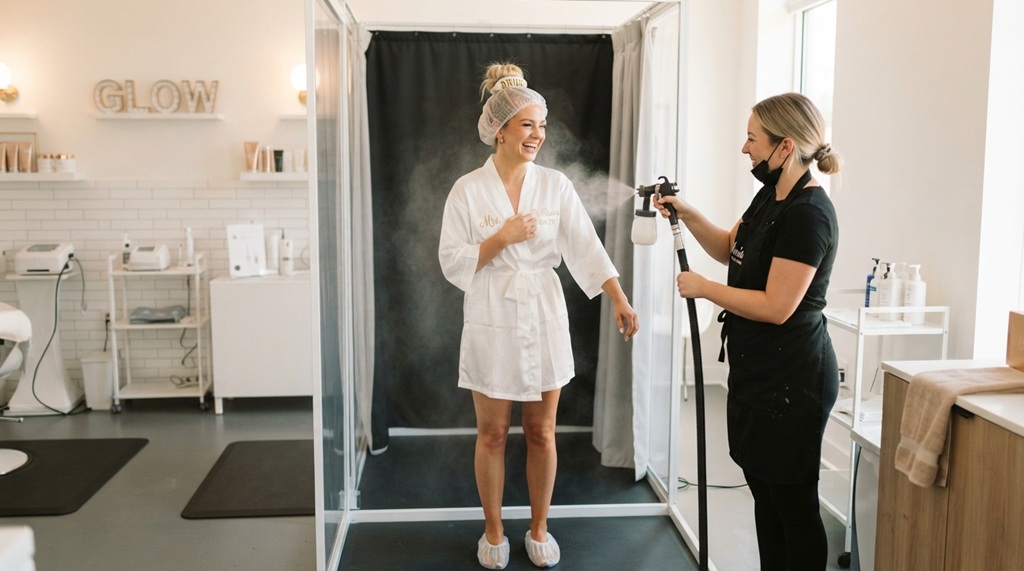
Organic spray tans are safe for most brides and grooms. They use plant-derived DHA and skip harsh chemicals found in some traditional formulas. That makes them a popular choice for sensitive skin on wedding day.
Still, “organic” doesn’t mean risk-free. A bad patch test, a rushed application, or the wrong timing can ruin your look. This guide walks you through the real risks, the benefits, and exactly how to get a flawless, natural glow for your big day.
We’ll also cover timing, aftercare, and questions real brides ask before booking their spray tan.
What Makes a Spray Tan “Organic”?
An organic spray tan uses DHA (dihydroxyacetone) sourced from plants like sugar beets or sugar cane. Most formulas skip parabens, alcohol, and synthetic fragrances. This lowers the chance of irritation for sensitive or reactive skin.
DHA itself is not truly “organic” in a certified sense it’s a sugar-derived compound that reacts with your skin’s surface layer. The term “organic” usually refers to the other ingredients in the solution, not DHA specifically.
Common Organic Spray Tan Ingredients
Most organic or “clean” spray tan solutions include:
- Plant-based DHA
- Aloe vera or coconut water as a base
- Natural bronzers like caramel or cocoa extract
- Essential oils for scent (instead of synthetic fragrance)
- Vitamin E or hyaluronic acid for hydration
These ingredients tend to feel lighter on the skin. They also wash off more evenly, without the orange tint some cheaper formulas leave behind.
Are There Any Real Risks With Organic Spray Tans?
Yes, but they’re mostly minor and preventable. The biggest risks are allergic reactions, uneven color, and breathing in the spray mist during application.
Skin Reactions and Allergies
Even natural ingredients can trigger a reaction. Essential oils, in particular, are common allergens. A patch test 48 hours before your wedding-day tan catches most issues early.
Redness, itching, or small bumps after a patch test mean you should skip that formula. Ask your technician for an alternative blend instead.
Breathing in the Spray Mist
DHA is approved for external use only. It hasn’t been tested for safety when inhaled or ingested. During application, you should wear a nose filter, protective eyewear, and lip balm to reduce exposure.
Reputable spray tan studios provide these protections automatically. If yours doesn’t offer them, ask before your session.
Uneven Color or Streaking
This isn’t a safety issue, but it’s a common wedding-day worry. Poor exfoliation before your appointment is the top cause of patchy color. Dry skin absorbs DHA unevenly, leading to darker patches on elbows, knees, and ankles.
Organic vs. Traditional Spray Tans: What’s the Real Difference?
The core tanning ingredient DHA is chemically similar in both. The difference lies in everything else in the bottle. Traditional spray tans often include parabens, synthetic fragrance, and alcohol-based drying agents.
| Feature | Organic Spray Tan | Traditional Spray Tan |
|---|---|---|
| DHA source | Plant-derived (beet, cane) | Often synthetic or unspecified |
| Added fragrance | Essential oils or fragrance-free | Synthetic fragrance |
| Preservatives | Fewer parabens/alcohol | May contain parabens/alcohol |
| Skin feel | Lighter, more hydrating | Can feel drying |
| Scent | Milder, less “biscuit” smell | Stronger DHA odor |
| Price | Slightly higher | Standard |
Neither type is inherently “unsafe.” The organic option simply reduces exposure to certain irritants, which matters if you have sensitive skin, allergies, or you’re pregnant.
Navigating Organic Spray Tans During Pregnancy
While most dermatologists consider sunless tanning during pregnancy low-risk as dihydroxyacetone (DHA) acts exclusively on the outermost layer of the epidermis without penetrating the bloodstream safeguarding maternal and fetal health requires a deliberate approach. The primary consideration rests in minimizing mist inhalation; thus, expectant brides or guests should ensure their treatment takes place in a well-ventilated suite while wearing a protective respiratory mask. Because individual pregnancies vary, consulting your obstetrician remains an essential prerequisite before booking your session. Once approved, achieving an imperceptible, radiant finish relies entirely on preparation embracing the principle that clean beauty starts with good skincare hygiene by thoroughly exfoliating and purifying the skin to build the perfect foundation for a smooth, enduring wedding-day glow.
How Far in Advance Should You Get Your Wedding Spray Tan?
Book a trial spray tan at least four to six weeks before your wedding. This gives you time to test the formula, see how your skin reacts, and adjust the shade if needed.
For the wedding itself, schedule your final spray tan one to two days before the ceremony. This timing lets the color fully develop without looking too fresh or fading too soon.
Sample Spray Tan Timeline for Brides
- 6 weeks before: Book a trial tan to test shade and formula
- 1 week before: Exfoliate skin thoroughly, 2–3 times
- 2 days before: Get your final spray tan appointment
- Day before/day of: Avoid heavy sweating, swimming, or tight clothing
This timeline applies to grooms and wedding party members too, not just brides.
How to Prepare Skin for a Safe, Even Spray Tan
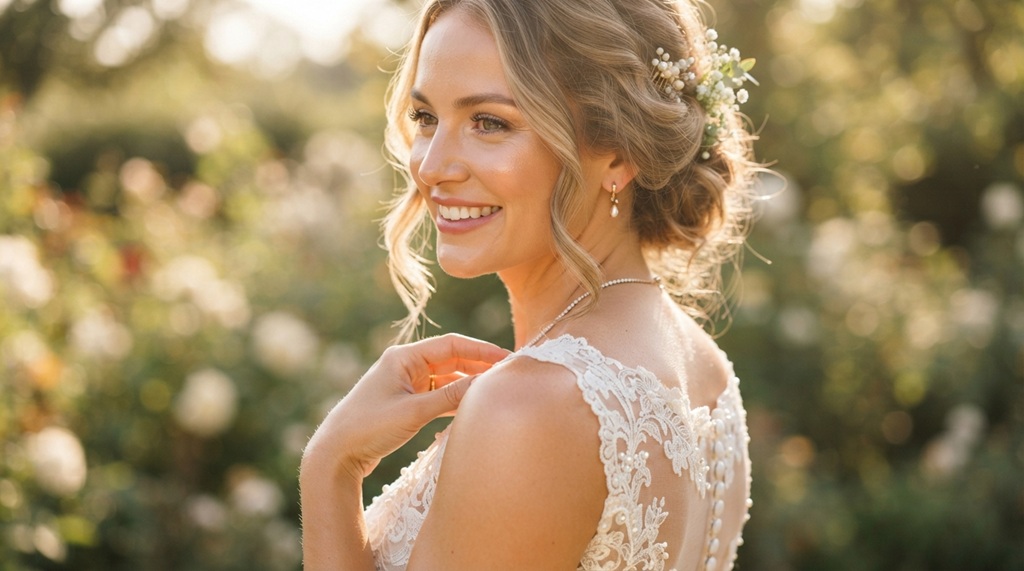
Good prep matters more than the formula itself. Skin that’s clean, exfoliated, and moisturizer-free absorbs DHA more evenly.
Before Your Appointment
- Exfoliate your entire body 24 hours prior, focusing on elbows, knees, and ankles
- Shave or wax at least 24 hours before, never right before your session
- Skip lotion, deodorant, and perfume on the day of your appointment
- Wear loose, dark clothing to your session to avoid transfer stains
After Your Appointment
- Avoid water contact for at least 8–12 hours (check your technician’s guidance)
- Skip the gym, sauna, or swimming pool for 24 hours
- Pat skin dry instead of rubbing after your first shower
- Moisturize daily with an oil-free lotion to extend the tan’s life
One tip many articles skip: avoid hot showers for the first two days after your tan. Hot water opens pores and strips color faster than lukewarm water does. This one change can add two to three extra days to your tan’s lifespan useful if your wedding and honeymoon are close together.
Who Should Avoid Organic Spray Tans Before Their Wedding?
Most people can safely get an organic spray tan. A few groups should take extra caution or skip it entirely.
- People with known DHA allergies: Even organic formulas contain DHA, so allergy risk remains
- Those with active skin conditions: Eczema, psoriasis, or open wounds can react unpredictably to DHA
- Anyone with asthma or respiratory sensitivity: Inhaling the mist can trigger symptoms
- Brides with a very tight timeline: Without time for a trial run, an allergic reaction close to the wedding date becomes a real risk
If you fall into one of these categories, talk to a dermatologist before booking. A patch test is non-negotiable in these cases.
Frequently Asked Questions
Is an organic spray tan safer than a regular spray tan?
It can be gentler on sensitive skin because it skips certain synthetic additives. However, both types use DHA as the active tanning ingredient, so neither is entirely risk-free. A patch test remains the best way to confirm safety for your specific skin.
How long does an organic spray tan last before a wedding?
Most organic spray tans last five to ten days, depending on skin type and aftercare. Proper exfoliation before application and gentle moisturizing afterward help extend that window. Brides often schedule their final tan one to two days before the ceremony for peak color on the wedding day.
Can I get an organic spray tan if I have sensitive skin?
Yes, organic formulas are often recommended specifically for sensitive skin. Still, a patch test 48 hours before your real appointment is essential. This catches any reaction before it affects your wedding-day look.
Will an organic spray tan look natural in wedding photos?
Yes, when applied by an experienced technician, organic spray tans photograph naturally under both flash and daylight. Choosing a shade close to your natural undertone helps avoid an overly orange or muddy look in photos. A trial run before the big day lets you see how the color reads on camera.
Should the groom and wedding party get spray tans too?
Many grooms and wedding party members do choose a light spray tan for photos. The same prep and timing rules apply to everyone, regardless of gender. Booking trial sessions as a group can also make for a fun pre-wedding outing.
Final Thoughts
Organic spray tans are a safe, popular choice for weddings when you follow a few simple rules. Patch test early, exfoliate properly, and time your final appointment two days before your ceremony.
Choose a reputable technician who uses quality ingredients and proper safety gear during application. With the right prep, your spray tan will look natural, last through your entire wedding day, and photograph beautifully from your first look to your last dance.