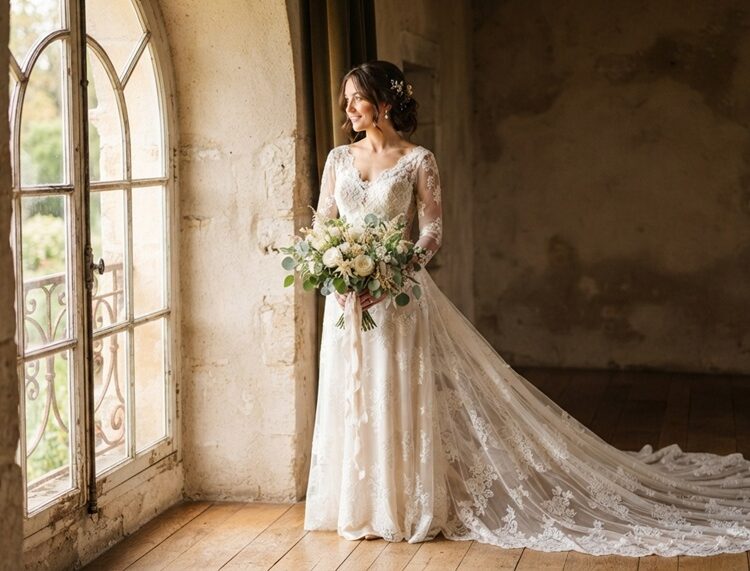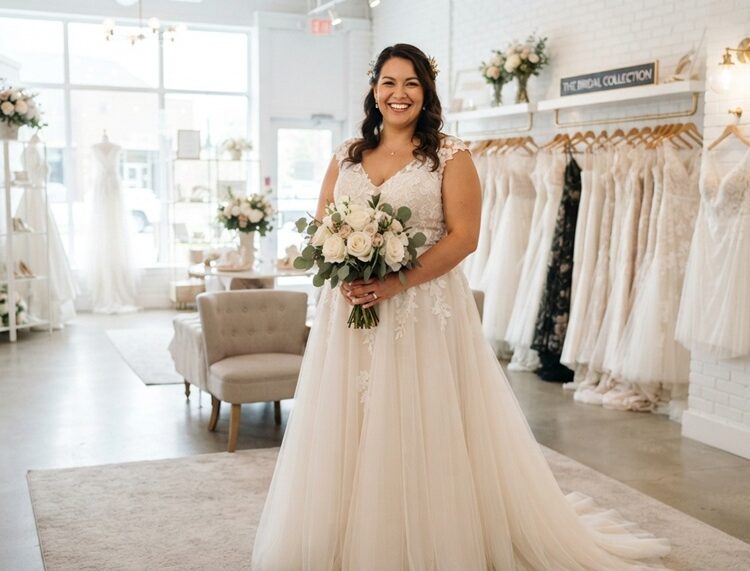
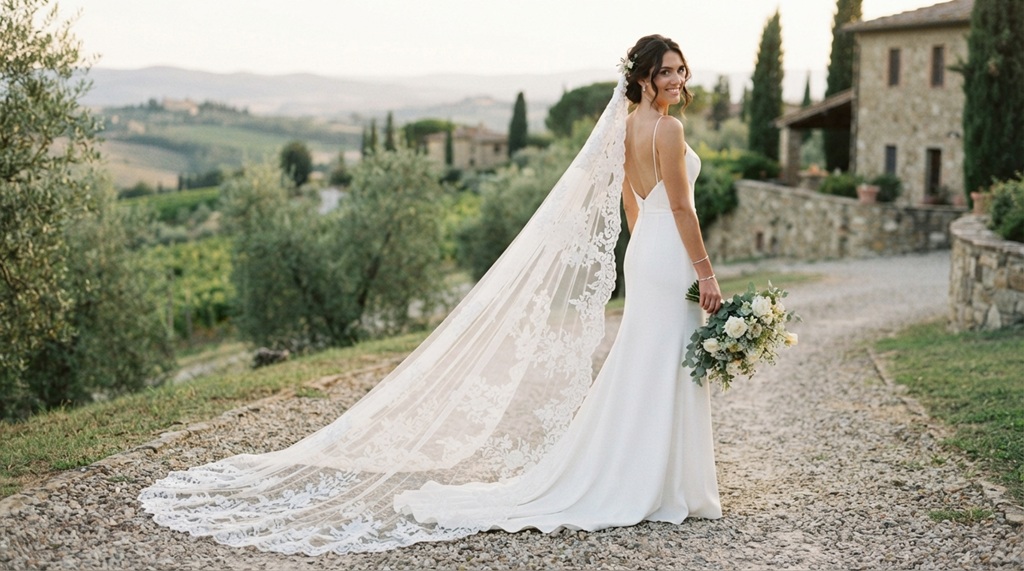
Designer veil trends that complete a modern bridal look include sheer tulle, raw edges, delicate lace trims, and subtle pearl details. The best veil suits your gown’s shape and your hairstyle. It adds a final layer of softness without hiding your dress.
Modern brides want veils that feel light and personal. Many choose clean lines over heavy trim. Others pick one statement detail, such as a scalloped edge or a hand-sewn pearl border.
This guide covers the top veil styles, lengths, and fabrics. You will also learn how to match a veil to your gown, style it with your hair, and care for it after the wedding.
Which Designer Veil Trends Are Popular Right Now?
Several veil styles stand out in current bridal collections. Sheer tulle, soft raw edges, lace trims, and pearl or crystal accents all suit a modern look. Each one works best when it supports your gown instead of competing with it.
Minimal Sheer Tulle
A minimal tulle veil is the simplest way to finish a modern look. It has no trim, no pattern, and no heavy weight. The result is a soft, airy cloud of fabric.
This style works well with detailed gowns. Because the veil stays plain, your beading or lace remains the star. It also photographs well in natural light.
Raw and Cut Edges
A raw edge means the fabric is cut clean, with no hem or border. Therefore, the veil looks sleek and almost invisible against the dress. Many brides like this style for its relaxed, effortless feel.
Cut-edge veils also suit minimalist gowns. A crepe sheath dress with a raw-edge veil looks sharp and current. Meanwhile, the same veil still feels soft and romantic.
Lace and Appliqué Trims
Lace-edged veils remain a classic choice. Designers now often use finer, narrower lace borders. Some veils feature lace flowers scattered across the tulle instead of a full edge.
This trend adds texture without adding bulk. If your gown has little detail, a lace veil can add the interest it needs. If your gown has heavy lace, however, choose a plain veil.
Pearl and Crystal Details
Pearl and crystal accents add quiet shine. Designers might sew a single line of pearls along the edge. Others scatter tiny crystals across the tulle so they catch the light as you move.
Subtle detail works best here. A few well-placed pearls feel modern. A veil covered in beads can feel heavy and dated.
Ribbon and Scalloped Edges
A thin satin ribbon edge gives a veil a crisp outline. A scalloped edge adds a gentle, curved finish. Both styles feel polished and work well with traditional or modern gowns.
How Does Veil Length Change Your Bridal Look?
Veil length shapes the whole mood of your outfit. A short veil feels playful and light. A long veil feels formal and dramatic. Choose a length that fits your venue, your gown, and the way you plan to move.
Here are the most common lengths and what they do:
- Birdcage or blusher: This veil is short and often covers the face. It suits vintage and city-hall styles.
- Shoulder and elbow: These veils end near the shoulders or elbows. They work well with detailed backs and are easy to wear.
- Fingertip: This veil falls to your fingertips. It is the most versatile length and flatters most gowns.
- Waltz: This style reaches your calves or ankles. It adds movement while staying off the floor.
- Chapel: This veil sweeps the floor and trails behind you. It suits formal ceremonies and long aisles.
- Cathedral: This is the longest style. It creates a grand, dramatic look and needs space to shine.
Think about your dress as well. A gown with a beautiful back looks best with a shorter veil. In contrast, a simple back can handle a long, flowing one.
Which Veil Fabrics Work Best for a Modern Look?
Soft tulle is the best fabric for most modern veils. It drapes well, feels light, and looks natural in photos. Other fabrics can work, but they change the shape and feel of the veil.
Silk tulle is one of the softest options. It falls in gentle folds and moves easily. Standard tulle holds its shape more firmly, so it creates a fuller, airier look.
Ask to touch the fabric before you buy. A stiff veil can stand away from the body. A softer one will fall closer to your gown. Neither is wrong, but each creates a different effect.
Lace veils use a different base. The lace gives structure and pattern, so the veil looks more formal. If you want a romantic, heirloom feel, lace is a lovely choice.
How Do You Match a Veil to Your Gown?
The easiest rule is to balance detail. If your gown is simple, add interest with your veil. If your gown is busy, keep the veil plain.
Use these pairings as a starting point:
- Simple crepe or satin gown: Try a lace-edged, pearl, or ribbon-trimmed veil.
- Heavy lace gown: Choose plain sheer tulle with a raw edge.
- Ball gown: A long chapel or cathedral veil balances the full skirt.
- Sheath or slip dress: A fingertip or elbow veil keeps the look sleek.
- A-line gown: Most lengths work, so pick based on your venue and style.
Color matters just as much. Ivory, white, and champagne tulle all look different next to fabric. Hold the veil against your dress in daylight before you decide. A mismatched shade can make either piece look dull.
Mastering Veil Placement: Elevating Your Bridal Hairstyle
Your chosen hairstyle dictates precisely where your veil sits and how fluidly it falls, making strategic placement essential to achieving a polished bridal look. Because most veils secure with an understated comb, adjusting its position—whether positioned high on the crown to add regal height above a sleek updo, or set low for a romantic cascade over loose waves or a low chignon—dramatically transforms your silhouette. Bringing your veil to your bridal hair trial allows your stylist to perfect its anchor, ensure it holds securely, and verify that the back profile looks flawless for guests during the ceremony. Furthermore, prioritizing effortless removal ensures you can seamlessly detach a comb-based veil after the vows without disrupting your styled hair for the reception. While modern sheer designs and dramatic lengths are leading current trends, many brides pair these accessories with classic elements; explore whether vintage lace wedding gowns are trending now to discover how antique lace patterns gracefully complement contemporary veil styling.
Do Cultural Traditions Shape Veil Choices?

Yes, they often do. Veils and head coverings carry different meanings in different cultures. No single style or symbol applies to every bride.
For example, the mantilla is a lace veil with roots in Spanish tradition. Some brides wear one to honor family heritage. In some Jewish weddings, the groom veils the bride before the ceremony. Other brides wear a dupatta or another traditional head covering instead of a Western veil.
If a tradition matters to you, ask your family about its meaning. Then work with your designer to blend it with your look. A modern veil can still honor the past.
How Do You Choose and Care for a Designer Veil?
Start with your gown, then choose the veil. Try both on together whenever you can. A veil that looks lovely alone may feel wrong once it meets your dress.
Follow these steps when you shop:
- Bring clear photos of your gown and hairstyle.
- Try several lengths in front of a mirror.
- Check the edges and trim for neat stitching.
- Walk around to see how the veil moves.
- Ask whether the comb can be adjusted or replaced.
After the wedding, care keeps your veil in good shape. Store it in a breathable bag or box, away from sunlight. Use a low-heat steamer to remove creases, and keep the steamer a safe distance from the fabric. Always test a small area first, because some trims react badly to heat.
Frequently Asked Questions
What is the most modern bridal veil style?
A sheer, raw-edge tulle veil is one of the most modern choices. It looks clean and light, and it pairs well with almost any gown. Add a few pearls or a thin lace trim if you want a little more interest.
Which veil length is the safest choice?
A fingertip veil is the most versatile length. It flatters most gown shapes and works in both small and large venues. It also stays manageable on the dance floor.
Can I wear a veil with a patterned or lace gown?
Yes, but keep the veil simple. A plain tulle veil lets your gown’s detail stand out. If you still want trim, choose a very fine edge that does not clash with the lace.
Should my veil match my gown color exactly?
Your veil should sit close to your gown’s shade. Ivory, white, and champagne all look different in person. Hold the veil against your dress in natural light to check the match.
Do I have to wear a veil at all?
No, a veil is entirely optional. Some brides prefer hair accessories, flowers, or nothing at all. Choose what feels right for your style, your culture, and your day.
Conclusion
Designer veil trends for a modern bridal look focus on softness and balance. Sheer tulle, raw edges, fine lace, and subtle pearls all work well. The right choice depends on your gown, your hair, and your wedding style.
Before you buy, try the veil with your dress and hairstyle together. Match the length to your venue, and balance detail between your gown and veil. With those steps, your veil will complete your look instead of overpowering it.