You have the invitation in hand, the date is set, and one question keeps circling: can a man wear a white suit to someone else’s wedding without stealing the spotlight? It is a fair worry, because white carries more social weight at a wedding than almost any other color.
Quick answer: Yes, a Men’s white suit for wedding guest works when the event is daytime, warm-weather, and not strictly traditional. Choose an off-white or cream tone rather than bright optic white, skip anything that looks bridal, and check the dress code first. The fabric, fit, and setting decide whether you look sharp or out of place.
This guide explains what a white wedding-guest suit actually is, why the color raises eyebrows, and how to wear one well. By the end, you’ll know the right shade to choose, the details to get right, and the mistakes that turn a bold choice into an awkward one.
What is a men’s white suit for a wedding guest?
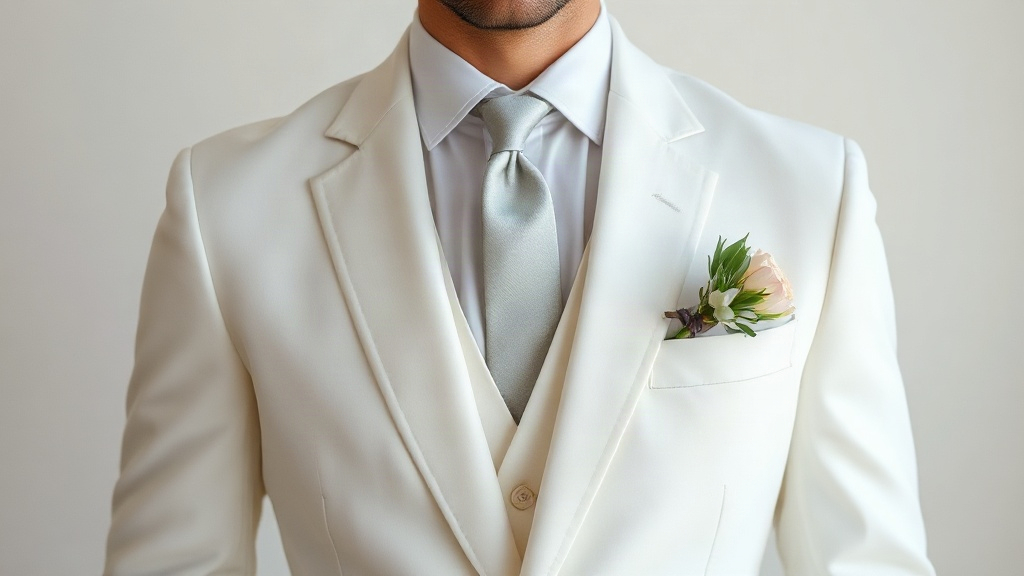
A Men’s white suit for a wedding guest is a two- or three-piece suit in a white or near-white tone, meant for an attendee rather than the groom. The key distinction sits in the shade and the styling. Pure optic white reads as bridal or groom territory. Off-white, ivory, cream, bone, and ecru sit closer to sand and stone, which keeps you clearly in guest mode.
Fabric matters more here than in a navy suit. White shows every crease, every wrinkle, and every drop of sweat. Linen and linen-cotton blends breathe well and suit outdoor summer weddings, though they wrinkle fast. Cotton twill and lightweight wool hold a cleaner line for indoor or evening events. Seersucker adds texture and hides creasing, but it looks casual.
A white suit also demands a full outfit plan. You cannot fall back on a dark jacket to hide a mediocre shirt or the wrong shoes. Everything is visible.
Treat the suit as a single considered purchase rather than an impulse buy. Try it on with the exact shirt, shoes, and belt you plan to wear, in daylight if possible, and check how the fabric reads next to your skin tone. Pale complexions often suit warm cream, while deeper tones can carry bone or ecru with more contrast.
The three common versions you will see
- Two-piece linen suit: Relaxed and ideal for beach or garden ceremonies. Expect a soft, slightly rumpled look.
- Three-piece with a waistcoat: Dressier, good for daytime formal events. A contrasting waistcoat in beige or pale gray adds depth.
- Separates styled as a suit: A white jacket with cream or stone trousers. This softens the effect and reduces the “all-white” impact.
What “white” actually means in menswear
Sales tags use “white” loosely. Hold two suits side by side and you will see the difference. Optic white has a blue undertone and looks stark. Ivory and cream lean warm and yellow. Bone sits between. Choose a warm, muted shade and you avoid the bridal comparison entirely.
The single biggest factor in pulling off this look is not the cut or the brand. It is picking a warm off-white instead of a bright paper white.
Why Men’s white suit for wedding guest matters
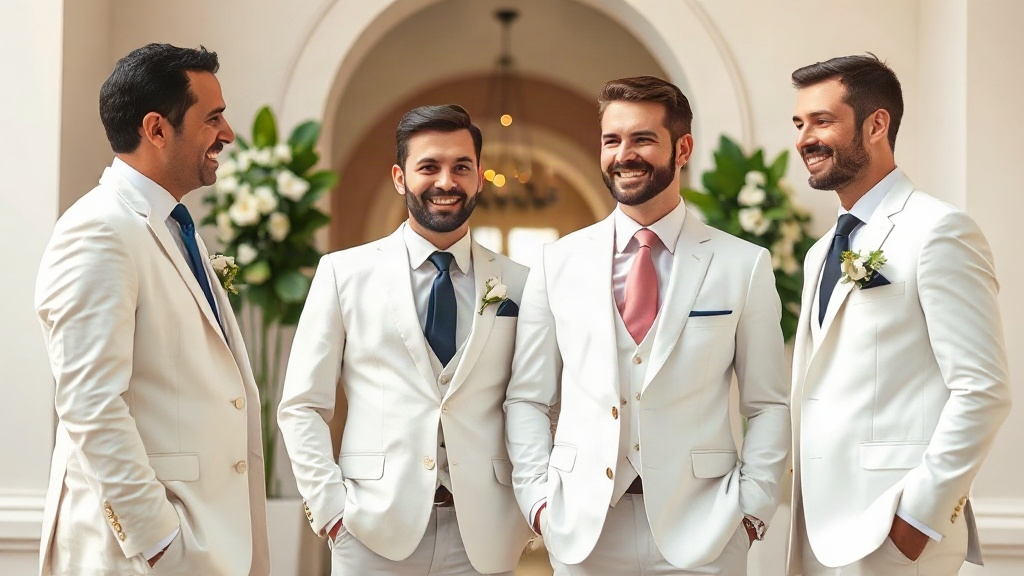
Color sends a message before you say a word. At a wedding, the couple and their families read the room fast, and a bright white suit stands out in photos and in person. Getting the tone right shows you understand the occasion. Getting it wrong can read as attention-seeking, even when your intent was style.
The practical stakes are real. Many wedding guests default to navy, gray, or beige because those colors are safe. A white suit gives you a distinct, memorable look for summer events where dark tailoring feels heavy. It photographs beautifully against green gardens, sand, and blue skies. That is why you see it so often at destination weddings.
It also signals confidence. Guests who choose cream or ivory have usually thought through the venue, the light, and the formality, and that care shows in how they carry themselves. The suit becomes a conversation starter rather than a risk, and the couple remembers you as the guest who dressed with intent rather than defaulting to navy.
The etiquette question, answered honestly
Traditional Western wedding etiquette reserves white for the bride. In practice, that rule concerns the bride’s dress, not every white item in the room. A man in a cream linen suit does not compete with a wedding gown. A man in a crisp optic-white three-piece at a formal evening wedding might raise an eyebrow.
Context resolves the tension:
- Daytime, outdoor, or destination wedding: a white or cream suit is widely accepted.
- Black-tie or formal evening wedding: skip it and wear dark tailoring.
- Cultural or religious ceremony with specific dress rules: follow the hosts, not the trend.
When it genuinely works in your favor
A white suit shines in heat. Light colors reflect sunlight, so you stay cooler through a long ceremony and reception. It also suits venues with a relaxed dress code, where a dark suit looks stiff. For a groom’s friends at a beach wedding, matching cream suits can look intentional and coordinated.
If you are close to the groom or bride, a quick text removes all doubt. “Planning to wear a cream linen suit, is that okay?” takes ten seconds and prevents an awkward photo moment.
Best practices
Start with the dress code on the invitation and work backward. “Beach formal” invites linen and light tones. “Black tie” does not. “Cocktail” leaves room for a white or cream suit if the event is during the daytime. When the code is silent, lean toward off-white and keep the styling conservative.
Ask about the bride’s gown and the wedding party’s palette before you commit. If the couple plans an all-white welcome party or the bridesmaids carry cream bouquets, a tonal suit may read as part of the décor. A quick question to the couple or a member of the wedding party settles it, and most hosts appreciate the courtesy.
Get the shade and fabric right
Pick a warm off-white, cream, ivory, or bone. Avoid optic white unless you are part of a coordinated wedding party. Choose linen or a linen blend for outdoor summer events and lightweight wool for indoor venues. Hold the fabric up to daylight before buying, because store lighting distorts white more than any other color.
Build the outfit around contrast
An all-white outfit looks like a costume. Break it up with deliberate contrast:
- Shirt: white is fine if the suit is cream, but a pale blue or soft pink shirt adds separation.
- Tie or pocket square: a navy, olive, or burgundy accent keeps the look grounded.
- Shoes: tan, cognac, or brown loafers work better than black. Black shoes with a white suit can look severe.
- Belt: match it to the shoes; a woven leather belt suits summer settings.
Nail the fit and the fabric care
White amplifies fit problems. A jacket that pulls at the button or trousers that break badly will be obvious. Have the suit tailored at the waist and sleeve length. Carry a lint roller and a stain pen, because a single coffee splash on a white trouser is visible from across the room. Sit carefully, avoid tomato-based dishes, and keep a napkin on your lap.
Comparison: linen vs lightweight wool for a white suit
| Factor | Linen | Lightweight wool |
|---|---|---|
| Breathability | Excellent in heat | Good |
| Wrinkling | High | Low |
| Formality | Casual | Smarter |
| Best setting | Beach, garden | Indoor, evening |
Linen wins on comfort, wool wins on polish. Match the fabric to the venue, not to your preference alone.
Common mistakes to avoid
The most frequent error is choosing optic white for a wedding where the bride wears white. It creates an unintended visual rivalry in every photo. You avoid it by choosing cream, ivory, or bone and letting the bride own the bright white.
A second mistake is wearing a white suit to a formal evening wedding. Dark tailoring signals respect for a black-tie or formal code. A white suit at 8 p.m. indoors can look out of step with the room.
A third misstep is wearing a white suit to a rehearsal dinner, welcome party, or morning-after brunch when the main ceremony already has a set palette. Couples often dress their wedding party in cream for those side events, and a guest in the same tone blurs the line between insider and attendee. Check whether the invitation names a color scheme for the weekend, and pick a contrasting shade if it does.
Styling errors that undermine the look
- All-white everything: white shirt, white suit, white shoes. Add contrast or the outfit looks like a uniform.
- Black accessories: black shoes and belt fight the softness of cream. Use brown or tan.
- Ignoring the venue: a linen suit at a formal ballroom reads as underdressed.
- Skipping the tailor: an untailored white suit looks like a rental costume.
- Forgetting upkeep: creases, stains, and yellowing at the collar ruin the effect fast.
White shows sweat and rain marks clearly. Check the forecast, bring a spare shirt for long outdoor events, and avoid white fabric on grass that stains.
The overlooked etiquette traps
Do not outshine the wedding party. If the groom and groomsmen wear cream, choose a different tone or a contrasting jacket. Ask about the couple’s color palette if you are unsure. Finally, store the suit properly before the event; hanging it in a garment bag prevents the creases that show up on white more than on any dark fabric.
FAQ
Is it acceptable to wear a white suit as a wedding guest?
Yes, in the right setting. Daytime, outdoor, and destination weddings accept cream and off-white suits. Avoid optic white and formal evening events, where dark tailoring fits the dress code better.
What shade of white should I choose?
Pick cream, ivory, bone, or ecru rather than bright optic white. Warm, muted tones keep you clearly in guest territory and avoid any comparison with the bride’s dress.
How much should I expect to spend on a white wedding-guest suit?
Prices vary widely by fabric and brand. Linen and cotton blends cost less than tailored lightweight wool. Budget extra for alterations, since fit matters more in white than in dark colors.
Can I wear a white suit to an evening wedding?
Usually not for formal or black-tie events. For a relaxed evening garden party, a cream suit can work if the invitation allows it. When in doubt, choose navy or charcoal.
What shoes go with a white suit?
Tan, cognac, or brown leather loafers and derbies work best. Match your belt to the shoes and avoid black, which looks harsh against cream fabric.
Conclusion
A Men’s white suit for wedding guest rewards preparation more than nerve. Pick a warm off-white shade, match the fabric to the venue, and build contrast with your shirt, accessories, and brown shoes. Check the dress code and, when you can, ask the couple directly.
Your next step is simple: read the invitation again, confirm the setting and formality, then choose cream over optic white. Do that, and you will walk into the wedding looking sharp, respectful, and entirely at ease.